

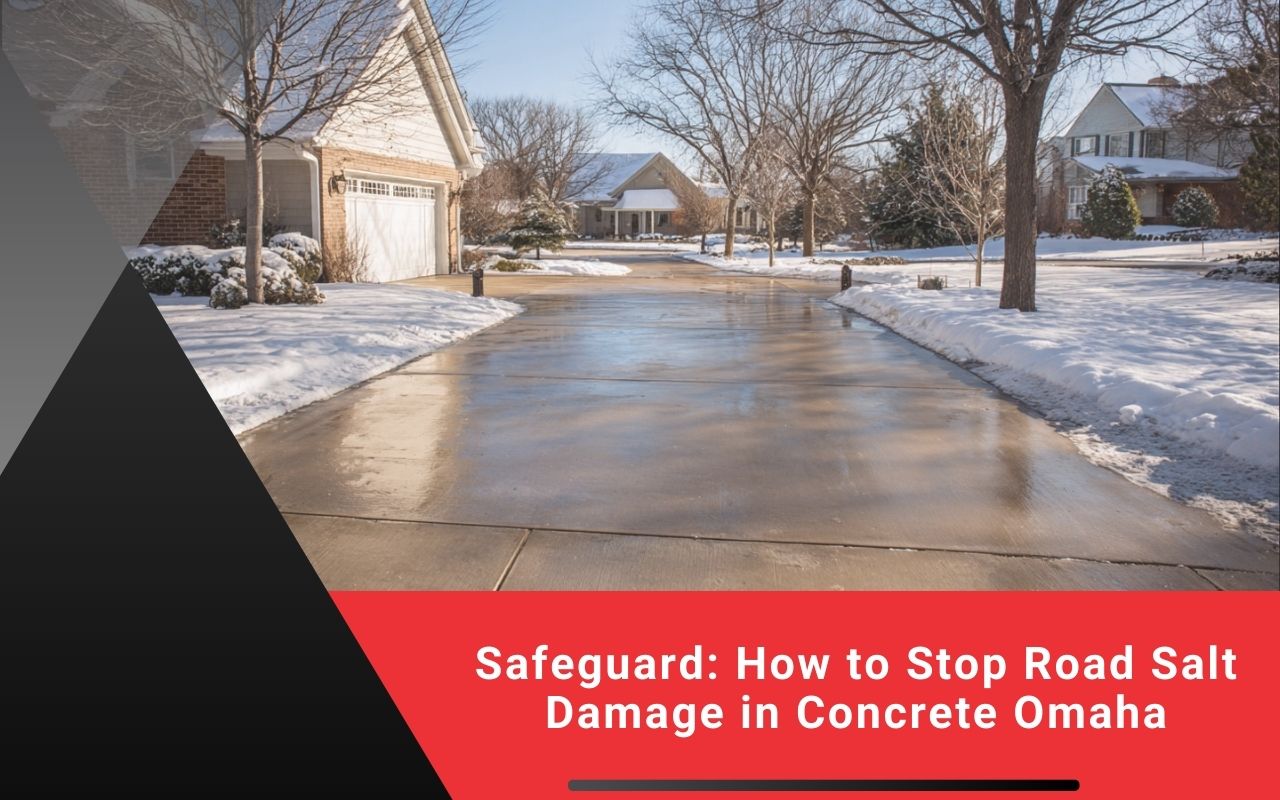
Safeguard: How to Stop Road Salt Damage in Concrete Omaha
Prevent road salt damage in concrete Omaha starts with knowing what winter does to your driveway. Road salt and freezing water can open tiny cracks. Then, those cracks can spread fast during thaw cycles.
However, you can protect your concrete with smarter ice-melt choices, the right sealer, and simple upkeep. As a result, your driveway can stay stronger and look better for longer.
How road salt harms concrete in Omaha
Because concrete has small pores, salty water can sink in and freeze. Then, the ice expands and creates tiny breaks. Over time, those breaks can grow into flaking and rough spots, especially after many freeze-thaw days.
Salt water enters pores and freezes, which expands inside the slab.
Repeated thaw and freeze cycles widen small cracks.
Salt residue can hold moisture, so damage repeats more often.
Why protecting concrete matters in Omaha winters
Prevent road salt damage in concrete Omaha helps you avoid uneven spots that can become trip hazards. Also, it can reduce the need for major repairs later. Since Omaha winters can shift quickly, early protection can make a clear difference.
Fewer repairs means less disruption to your home routine.
Smoother concrete helps with safer walking and shoveling.
Better surfaces can support curb appeal year-round.
Deicer choices that are easier on concrete
If you want to reduce wear, consider Deicer alternatives in Omaha that are less harsh than standard rock salt. For example, some blends focus on traction instead of heavy chemicals. Even so, you should match the product to your typical cold snaps.
Traction mixes (like sand blends) for grip with fewer chemicals.
Gentler melt products for mild cold periods.
Targeted spot use near steps and slopes, rather than full coverage.
Additionally, pairing gentler deicers with good sealing can improve results. If you want to see what WMG Caulking can do for surface protection, explore the concrete-related options on our WMG Caulking services page.
Seal your driveway to block salty water
A good sealer helps limit how much salty water can enter the concrete. That matters because less water inside means less ice pressure later. As a result, homeowners often choose a Salt-resistant concrete sealer for Omaha to reduce flaking and surface wear.
Prevent road salt damage in concrete Omaha is easier when you seal before the first big storm. Moreover, sealing supports easier spring cleanup because salt does not bond as tightly to the surface.
Penetrating sealers for longer protection
Many homeowners prefer penetrating sealers because they soak in and help repel water from inside the slab. In particular, a Silane siloxane sealer for Omaha can help reduce water absorption while keeping a natural look. Also, it can let trapped vapor escape, which supports healthier concrete.
How to apply sealer the right way
Even the best product needs good prep. First, clean the surface well, and then let it dry fully. Next, apply thin, even coats, so the sealer can settle in. Finally, keep traffic off the area until it cures.
Prevent road salt damage in concrete Omaha improves when you time sealing for mild days. For example, aim for stable temperatures so the product sets evenly and lasts longer.
Spring steps after the snow melts
Once winter ends, Post-winter driveway maintenance in Omaha helps you catch small issues early. Start with a close look for new cracks, and then clean off salt film. After that, repair small gaps so water has fewer places to enter next season.
Rinse and wash away salt residue to reduce lingering moisture.
Fill small cracks to slow future spreading.
Check drainage so meltwater flows away from the slab.
Frequently Asked Questions
What is the biggest cause of winter concrete damage in Omaha?
Often, it is water that soaks in and freezes. Road salt can speed that cycle by pulling moisture into the surface.
Are deicer alternatives still safe for walkways?
Yes, many are. However, results depend on temperature and how quickly you remove snow and slush.
How often should I reseal my driveway?
It depends on traffic and weather exposure. Still, many homeowners reseal every few years for steady protection.
Does a penetrating sealer change how concrete looks?
Usually, it keeps a natural finish. In many cases, it is less shiny than surface-coating sealers.
When should I call a pro for help?
If you see wide cracks, heavy flaking, or uneven areas, it helps to get advice. You can reach WMG Caulking through the WMG Caulking contact page.
Build a simple plan for year-round driveway strength
Prevent road salt damage in concrete Omaha works best with a routine. First, choose kinder deicers. Then, seal before winter. After that, clean and repair in spring, so small issues do not grow.
Prevent road salt damage in concrete Omaha becomes much easier when you stay consistent. With steady care and the right materials, your driveway can handle Omaha winters with fewer surprises.