

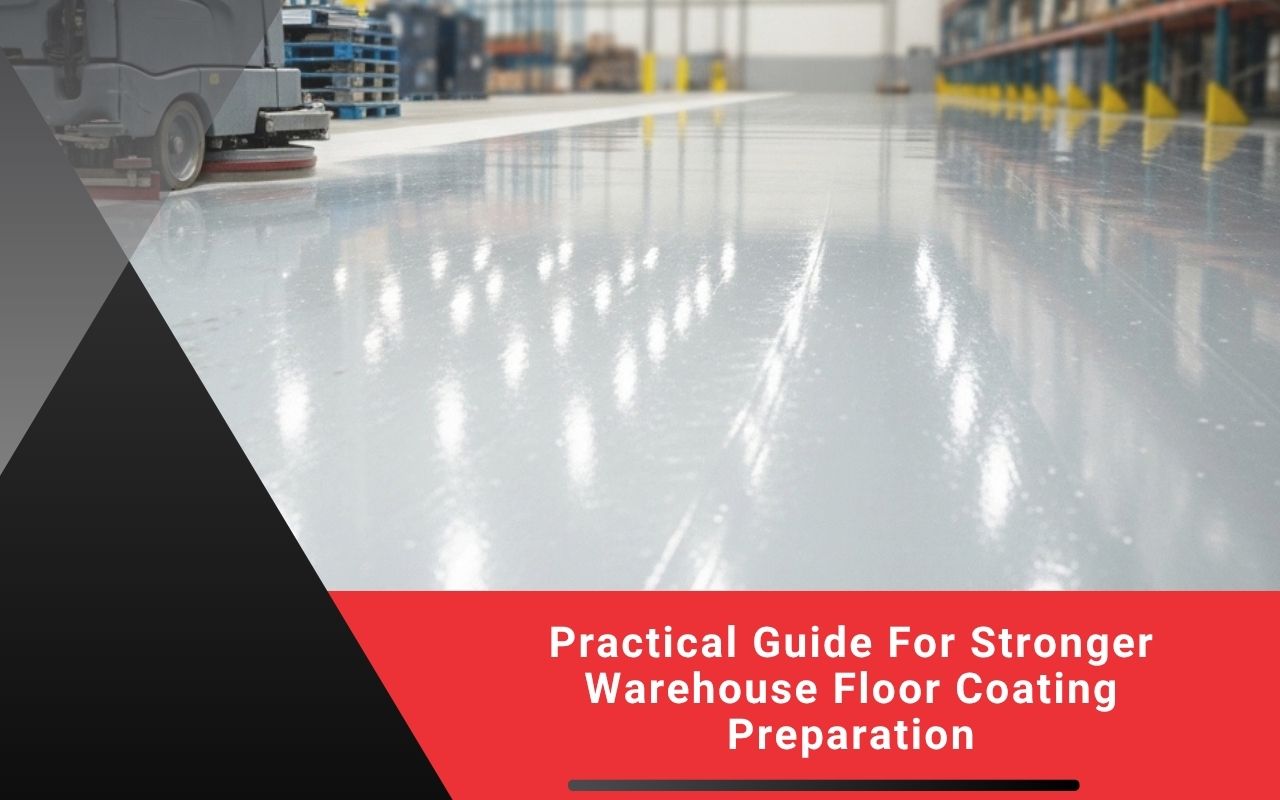
Practical Guide For Stronger Warehouse Floor Coating Preparation
Warehouse floor coating preparation starts with a clean, dry, and steady base. When the floor is prepared the right way, the coating can bond better and last longer under daily use.
At WMG Caulking, we help customers understand each step before work begins. Therefore, your warehouse can stay safer, cleaner, and better prepared for heavy traffic.
Why careful preparation protects your warehouse floor investment
Good warehouse floor coating preparation helps prevent peeling, flaking, and weak spots. Dust, oil, loose concrete, and old coatings can all cause coating adhesion issues after the work is finished.
Surface preparation for floor coating also supports daily warehouse activity. A smooth floor can reduce trip risks, help equipment move better, and protect your space from early wear.
Moisture testing helps prevent costly coating failure later
Concrete floor moisture testing is important before any coating is applied. Moisture trapped inside the slab can push upward and cause bubbles, soft areas, or coating failure.
Use moisture testing before choosing a coating system.
Check problem areas near doors, drains, and older slabs.
Allow extra drying time when readings are too high.
Choose a moisture barrier when the floor needs added protection.
When customers contact WMG Caulking, we explain why this step matters. As a result, warehouse floor coating preparation becomes more reliable from the start.
Cleaning methods that create a ready concrete surface
Warehouse floor cleaning removes grease, dust, old residue, and loose particles. These small things can weaken the bond between the concrete and the coating if they stay on the surface.
First, the floor should be swept or vacuumed. Then, stains may need scrubbing, degreasing, or pressure washing. After that, the floor must dry fully before the next step begins.
Essential tools make the preparation process easier and safer
The right tools help create a cleaner and more even surface. For many warehouses, basic cleaning equipment is enough for light work, while damaged floors may need stronger machines.
Industrial vacuum for dust and loose debris.
Floor scrubber for stains and surface dirt.
Scrapers for old coating or stuck material.
Grinder or shot blaster for rough concrete areas.
Gloves, goggles, and masks for safer work.
Before starting warehouse floor coating preparation, our team reviews the floor condition. You can also view our professional service options for related support.
Repairing cracks creates a smoother coating base overall
Cracks, holes, and uneven spots should be repaired before coating. Small gaps may need patching material, while wider cracks may need stronger repair products and more curing time.
After repairs dry, the patched areas should be sanded or ground smooth. This helps the coating spread evenly and reduces thin spots that can break down faster.
Choosing coating materials for daily warehouse work demands
The best coating depends on traffic, chemicals, moisture, and the finish you want. Epoxy can work well for heavy use, while other systems may fit spaces with heat, sunlight, or movement.
With WMG Caulking, you get clear guidance before choosing a system. For more details, visit our floor coating service page and compare your options.
Frequently Asked Questions
Why does floor preparation matter so much?
Floor preparation helps the coating bond to the concrete. Without it, dirt, moisture, or weak concrete can lead to peeling and early damage.
How long should a warehouse floor dry?
Drying time depends on moisture, temperature, and air flow. However, the floor should be fully dry before coating starts.
Can old coatings stay on the concrete?
Old coatings should be checked first. Loose or damaged coatings must be removed so the new layer can bond correctly.
What causes coating adhesion issues?
Common causes include dust, oil, moisture, weak concrete, and poor cleaning. Proper preparation helps reduce these risks.
How should coated floors be maintained?
Regular sweeping, gentle cleaning, and quick touch-ups help protect the finish. You can review our floor care guide for helpful tips.
Long term care keeps coated floors performing well
Warehouse floor coating preparation does not end when the coating cures. Ongoing care helps the surface stay strong, safe, and clean during daily warehouse activity.
Sweep or dust mop the floor often.
Use a mild cleaner for deeper cleaning.
Clean spills before they sit too long.
Check busy areas for scratches or thin spots.
Follow helpful epoxy floor care tips when needed.
At WMG Caulking, we believe careful planning and steady maintenance protect your investment. For project questions, get in touch with us through our contact page.